
Sir John Lumsden KBE
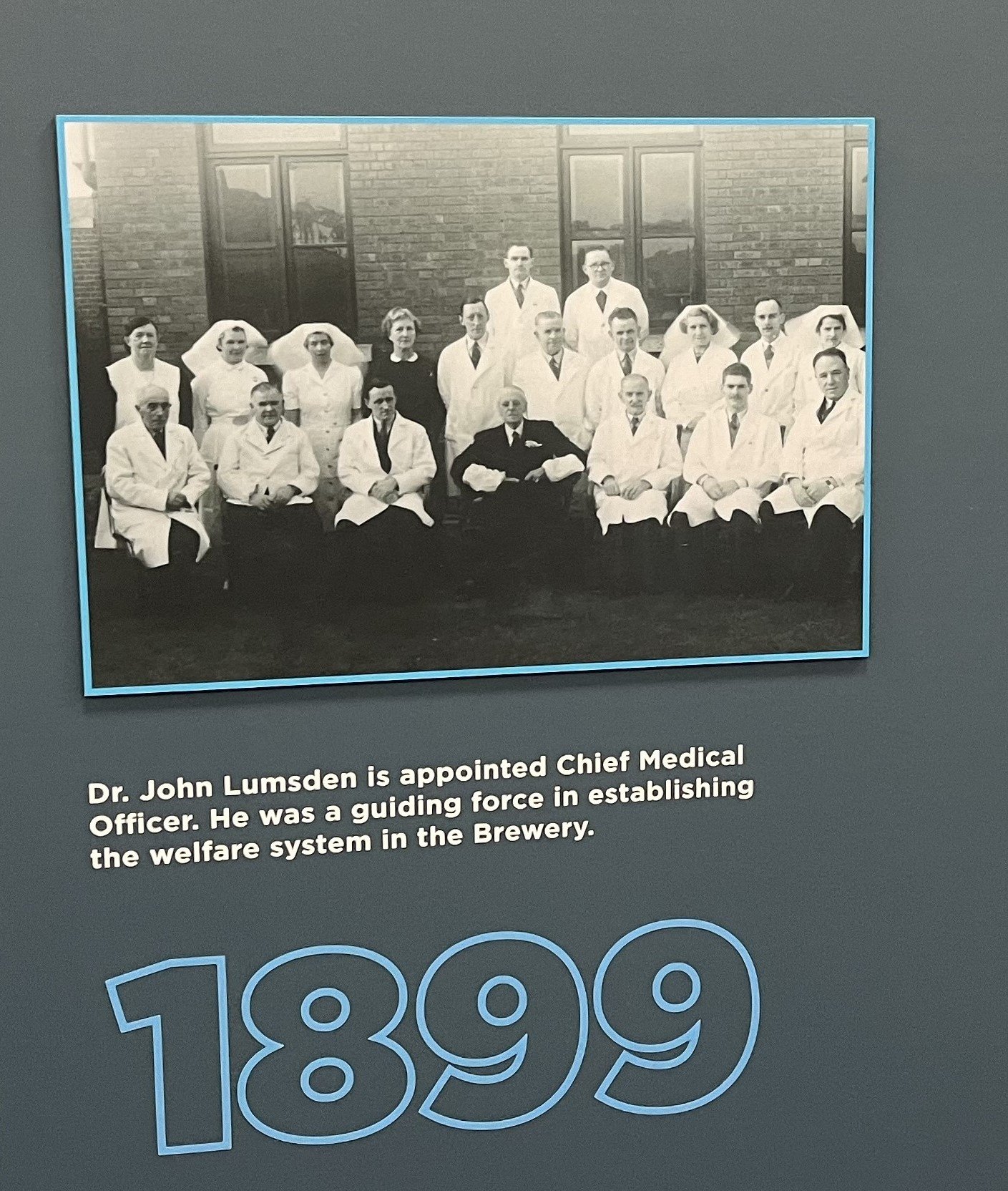
(14th November 1869 – 3 September 1944)
An Irish physician, Sir John Lumsden KBE gained prominence through his service as Chief Medical Officer of Guinness Brewery. Throughout his tenure there, he established the St John Ambulance Brigade of Ireland as well as St James’s Gate F.C. He was also recognised for his impartial care of all wounded individuals, regardless of affiliation, during the 1916 Easter Rising.
Family Background:
Sir John Lumsden, the son of bank manager, John Lumsden and Florence Isabella Groom Lumsden (née McKean), was born in Drogheda, Co. Louth, Ireland in 1870. His father relocated from Scotland to take up a banking position in Armagh, before joining the Provincial Bank in Dublin in 1867. Lumsden senior was an avid golfer and teamed up with his sons in 1885 to lay out a rudimentary course west of the Phoenix Cricket Club. This initiative founded the Dublin Golf Club, Ireland’s second-oldest golf club which was later renamed the Royal Dublin Golf Club in 1891.
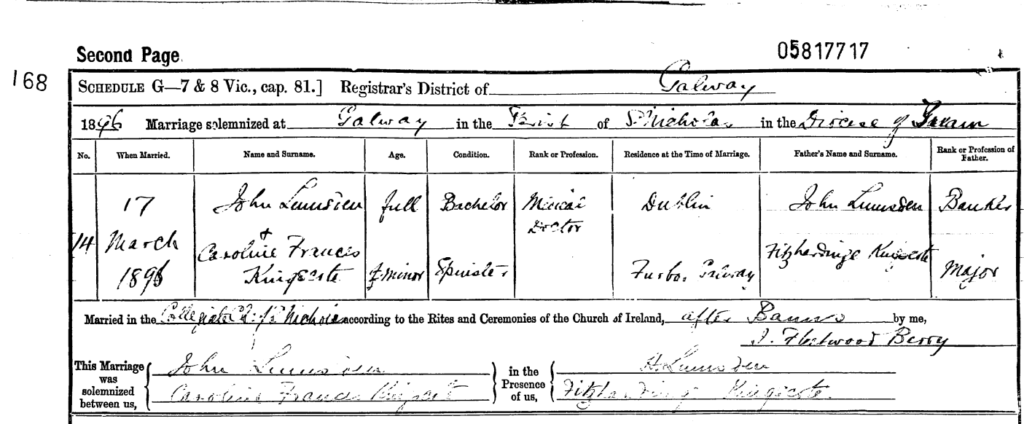
In 1896, John Lumsden married Caroline Frances Kingscote, daughter of Major Fitzhardinge Kingscote and Agnes Grant Stuart. The couple’s first child, John Fitzhardinge Lumsden, was born on 11 June 1897. Following their son’s birth at Lumsden’s parents’ home, the family moved to 4 Fitzwilliam Place, Dublin, where Lumsden opened a first-floor medical practice. They later welcomed five daughters: Leslie (1898), Norah (1900), Margery (1908), and twins Nancy and Betty (1911).
Medical Profession:
Lumsden served as a staff physician at Mercer’s Hospital in Dublin, and by 1902, he was appointed Principal Medical Officer for the Commissioners of Irish Lights. However, he achieved his greatest fame through his position as Medical Officer (then Chief Medical Officer) at the Guinness Brewery.
The Guinness Family:
The Guinness family had a tradition of noblesse oblige (an idea that someone with power and influence should use their social position to help other people) and philanthropy. So Lumsden’s work for Guinness focused on the well-being of the employees, many of whom lived in appalling conditions in the slums and tenements of inner city Dublin.
Following the Great Irish Famine (1845–1846), a major migration from rural Ireland into urban cities such as Dublin occurred as people sought employment. Severe overcrowding emerged, leading to 33.9 percent of families in Dublin residing in single-room quarters. These severe, cramped living conditions and widespread poverty fueled disease outbreaks, causing Dublin to record Europe’s highest mortality rate by 1881.
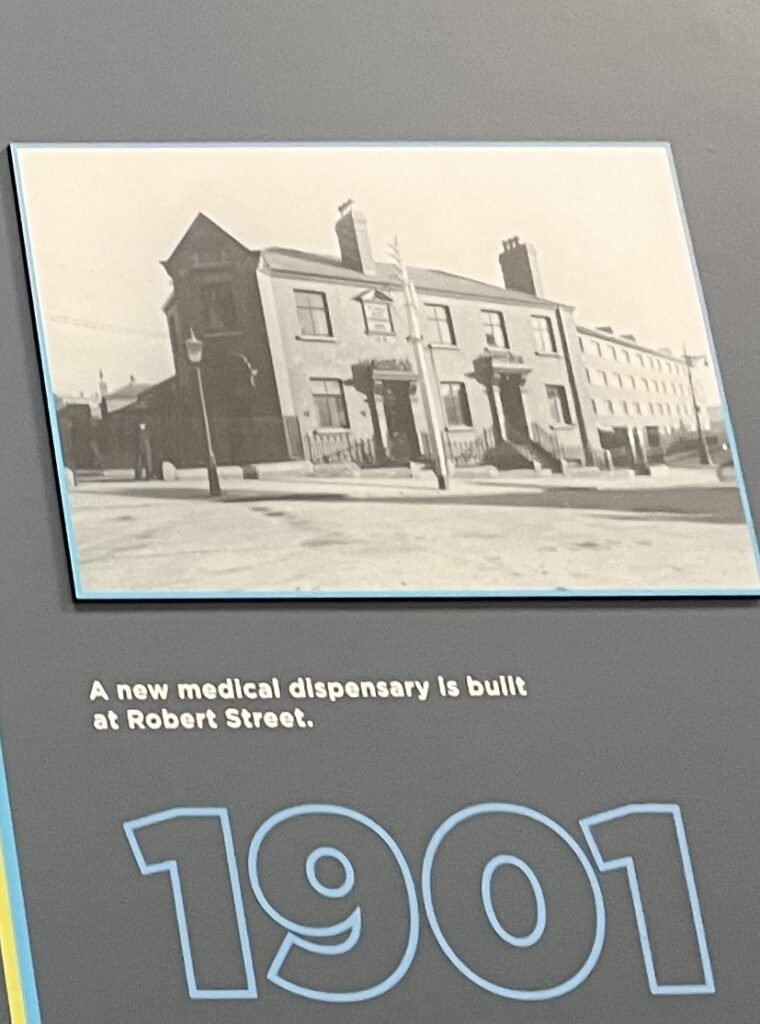
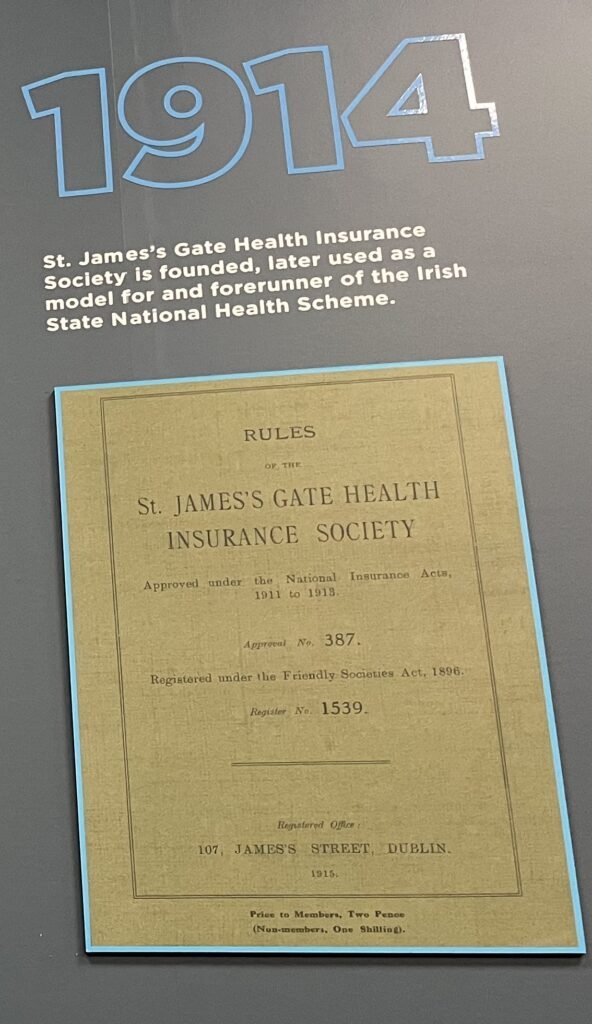
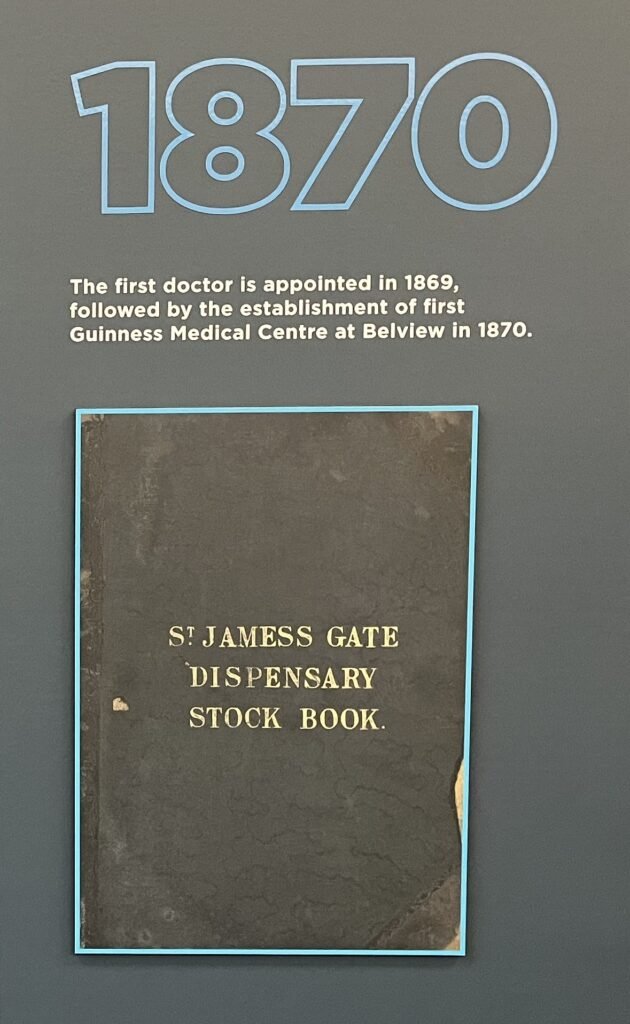
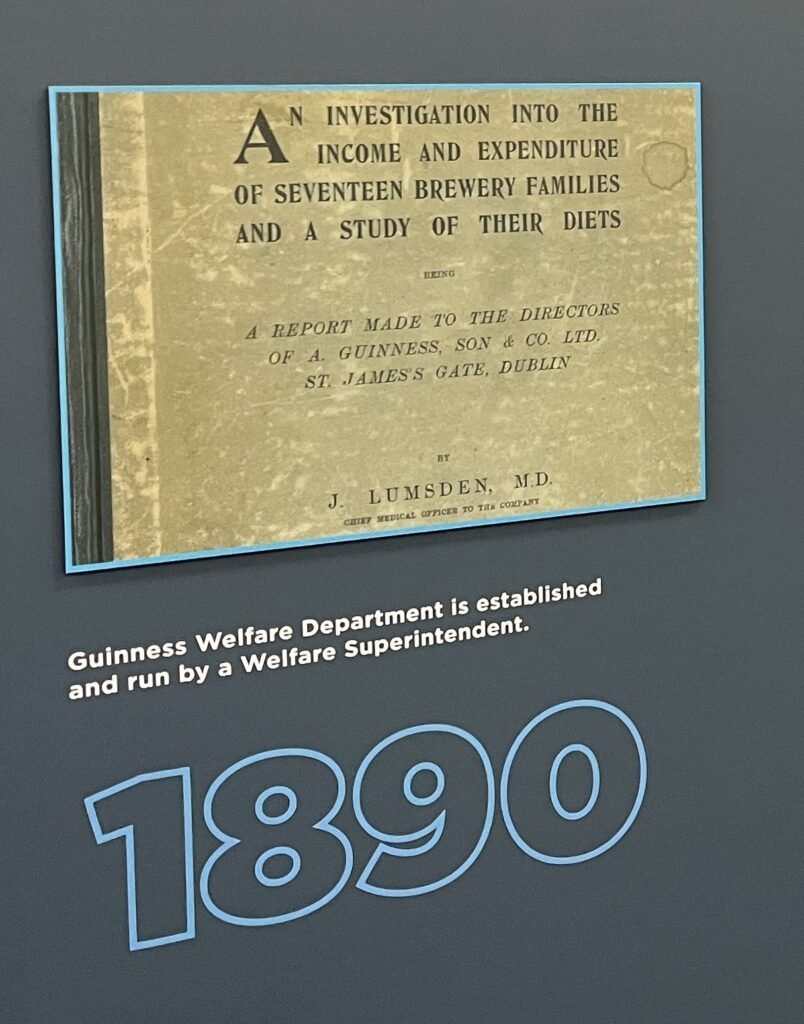
Recognising elevated rates of tuberculosis among Guinness workers, Lumsden identified severe overcrowding as a likely contributor. In 1900, he obtained permission from the Guinness board to conduct a two-month inspection of workers’ homes to ensure suitable living conditions and to explore methods for disease prevention and treatment. These findings directly influenced the design of the main Iveagh Trust housing developments constructed between 1903 and 1905. Additionally, Lumsden evaluated employee nutrition, organised cooking courses for workers’ wives, and assisted in founding the inaugural Guinness Sports Club, which encompassed St James’s Gate F.C, Hockey, Rugby, Bowls and Handball. He also introduced the first medical and pension scheme for employees, providing occupational healthcare and defined benefits pensions. A new dispensary opened in 1907, followed by a dental department in 1915 and a physiotherapy clinic in 1917
St John’s Ambulance Brigade of Ireland:
While serving as Medical Officer, Lumsden was requested to organise First-Aid Instruction for the workforce at the Guinness Brewery. Owing to their immense popularity, these classes evolved into the initial registered division of the St. John’s Ambulance Brigade of Ireland. Established by Lumsden in 1903, he served as its inaugural Commissioner until his death.
1913 Dublin Lockout:
During the 1913 General Strike (frequently called the Dublin Lockout), the St John’s Ambulance Brigade participated in key historic events by providing medical aid to those injured in the conflicts. The brigade gained particular prominence in Dublin throughout the 1916 Easter Rising, where members treated casualties from all factions while supporting and provisioning evacuees. Amid the street battles across Dublin, Lumsden stood out as a recognisable presence, routinely running into danger with a white flag and his medical bag to tend to injured individuals regardless of their side. In recognition of these courage actions and his role in establishing the St. John’s Ambulance Society, he was knighted as Sir John Lumsden KBE by King George V.
The National Blood Transfusion Service Board:
To serve Dublin-area hospitals, Lumsden encouraged brigade members to donate blood and placed advertisements in Irish national newspapers inviting the public to join an ‘on call’ donor panel. Although this service evolved into the National Blood Transfusion Association in 1948, its roots trace directly back to the brigade and specifically to Lumsden’s initiative.
The Irish Red Cross
In 1923, after the establishment of the Irish Free State, Sir John wrote to the President of the Council of the Irish Free State to start the process of breaking the brigade away from the control of the British Red Cross Society and the Order of the St John of Jerusalem. This led to the brigade becoming an Associated Body and completely independent from the English-based St. John Ambulance and further led to the formation of the Irish Red Cross Society in 1939.
Retirement
Lumsden retired to Earlscliffe in the Bailey area of Howth, Co. Dublin, in 1930, Lumsden actively pursued his passion for gardening. His daughter, Betty L’Estrange, recalled that the grounds were “virtually shrubless and flowerless” upon his arrival. He undertook a complete transformation of the property by planting shrubs and constructing terraces. To commemorate his service with the St John Ambulance Brigade, he crafted a Maltese cross sundial at Earlscliffe, a project that brought him “enormous pleasure”. This sundial can still be seen today at Earlscliffe, which later came into the hands of the gardener and horticulturalist David Robinson. Sir John Lumsden died on 3 September 1944
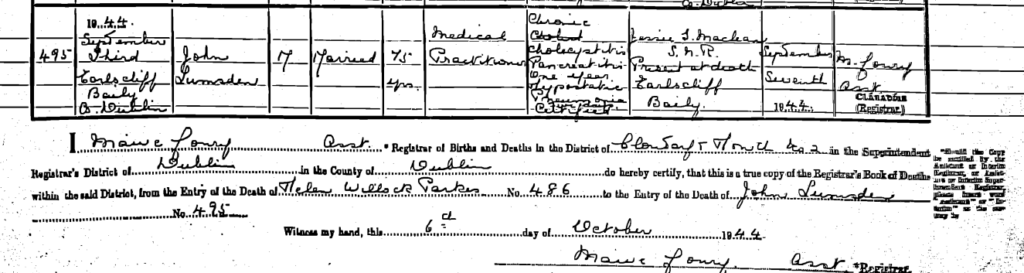
Lady Caroline Lumsden sold the house to William Martin Murphy (journalist, businessman and Irish Politician) and his wife in 1945 and moved to a smaller dwelling near Sutton Railway Station. She passed away in 1949.
Lumsden’s Legacy
Sir John Lumsden’s healthcare interventions transformed Irish society by treating poverty as a primary root cause of disease, Operating during Ireland’s tumultuous transition from British rule to independence, he recognised that clinical medicine alone could not cure Dublin’s public health crisis. By pioneering preventative community care, emergency response systems, and workplace wellness, his initiatives laid the foundational blueprint for modern Irish social and economic welfare.
References:
- The Guinness Archives
- Earlscliff.com
- St John Ambulance Ireland
- Tony Corcoran on pioneering Dr. Sir. Lumsden; An Irish Diary – The Irish Times 23/9/2024
- Mercer’s Medical Centre: A legacy of care for our students and our local community: RCSI.com 22nd February 2022
0 Comments