
Iveagh Grounds
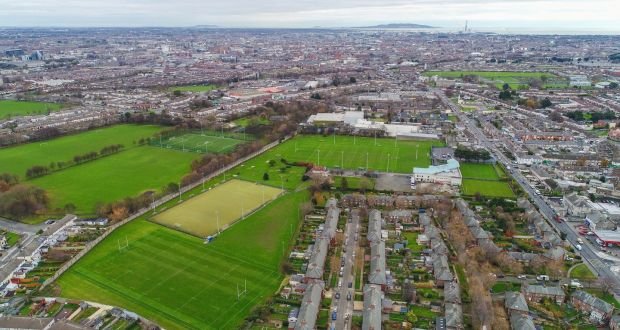
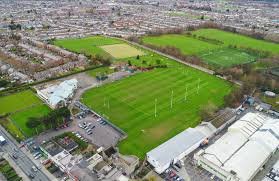
In 1905 Dr. John Lumsden, Chief Medical Officer of St James’s Gate Brewery asked the Board of the Brewery to purchase a site adjacent to Dolphin’s Barn Brickfields, as a sports facility to encourage workers to exercise more.
The Dolphin’s Barn Brick Company previously attempted to buy the farmland from Mr. Charles Begg of Fort Osman, Crumlin Road to extend their quarry business but was unsuccessful. This 25 acre site in Drimnagh on the Crumlin Road was sold to the 1st Earl of Iveagh, Lord Edward Cecil Guinness in 1920 which he donated to the Guinness Athletic Union. He set up a board of trustees, chaired by Dr. Lumsden and donated £20,000 to develop the site.
The Guinness Athletic Union:
The Guinness Athletic and Cycling Union was established in 1905 by Chief Medical Officer, Dr John Lumsden of St James’s Gate Brewery for its workers to exercise. The name changed to the Guinness Athletic Union in 1912. By 1920 membership had increased and St James’s Gate Football Club was joined by tennis, cricket and handball members.
Rugby:
In 1926 St James’s Gate Rugby Football Club was founded by brewery workers, Freddie Parkinson, Eddie Potts, Bill Toner and other brewery personnel. They were not recognised by Leinster Rugby, as they didn’t have their own playing fields or pavilion. Their first home game had one spectator, an onlooking cow. In 1942, The Guinness Rugby Club replaced St James’s Gate Rugby Football Club which seemed to have been disbanded in the 1930’s. They applied for affiliation to the Leinster branch of the Irish Rugby Football Union and were successful.
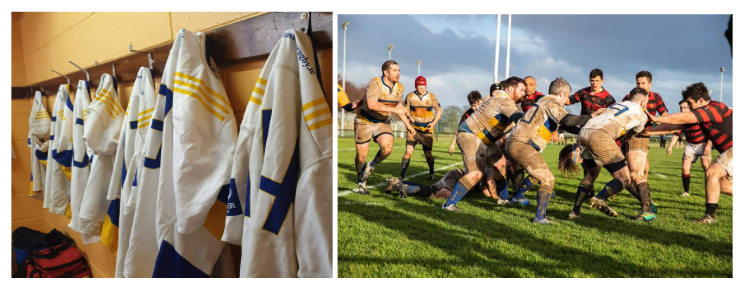
1928 saw the arrival of St James’s Gate Hockey Club. This expansion highlighted the need for a permanent home base.
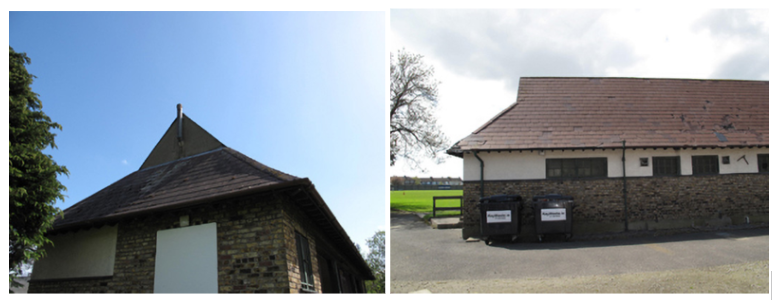
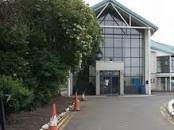
The sports grounds were officially opened by the 2nd Earl of Iveagh, Rupert Guinness and his wife, Gwendoline Guinness, Countess of Iveagh on 14th April, 1928 following the death of his father, Cecil Edward Guinness. Its modest sports pavilion (built 1940-50’s) of recessed bays with yellow brickwork, red roof tiles, wooden windows and veranda was registered on the National Inventory of Architectural Heritage (Reg. 50080194) in 2013 for its unique character
The Introduction of Football:
The GAU allowed Bangor Celtic and St John Bosco Football Club to use the grounds for soccer games. Ironically, the five bay single storey sport pavilion built in 1950’s used Dolphin’s Barn yellow brick and is now registered with the National Inventory of Architectural Heritage.
National Institute of Architectural Heritage:
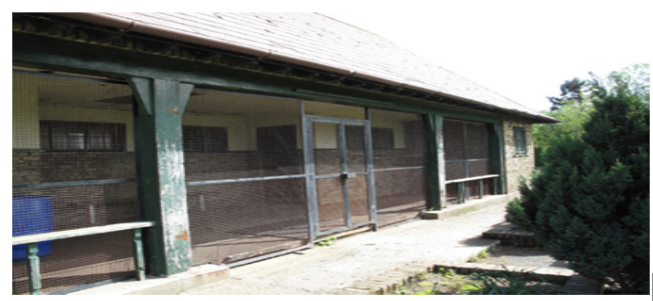
A single storey sports pavilion was built in the 1950’s. The building features yellow brick Dolphin’s Barn brick walls, a gablet hipped slate roof and a verandah with three open bays. Another feature of the pavilion is the timber windows, square head door and concrete platform. The building is now registered with the National Built Heritage Service.
Economic Changes and Mergers:
In 1994, the Guinness Brewery stopped subsidising employees’ membership of the club and, in return, built the current clubhouse. Their aim was for the club to become a stand alone financial facility. In 1997, St James’s Gate Brewery and the Grand Metropolitan merged to form Diageo. In the 2000’s bar deficits began to emerge and Diageo gradually cut ties with the sports club who had three hundred members.
The Sale of Iveagh Sports Grounds:
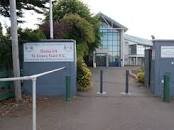
Diageo sold the Iveagh Grounds to Trinity College Dublin in 2017 for €2 million. The Guinness Athletic Union withdrew from the sport’s grounds. The draught taps and licenced bar accessories were also removed from the facility. In 2015, Trinity College Dublin, in collaboration with Athletics Ireland launched the Community Athletics Hub at Trinity Iveagh Sports Grounds. The project is supported by Sports Ireland, funded by the Government’s Dormant Fund Account. In 2018, a feasibility study was undertaken by Trinity College The grounds deteriorated over a period of seven years. In 2021, the Trinity Ladies Gaelic Football Association began training at the grounds.
In 2024, Trinity Sports outlined their plans to invest €30m into Trinity Iveagh Sports Grounds. To date the grounds have not been developed or maintained to appropriate standard which is disappointing for the sports groups who used the grounds and the wider community.
The Conservation of Trinity Iveagh Grounds:
In June 2025, Dublin City Council proposed Variation 8 to the Dublin City Development Plan 2022 – 2028 to protect Iveagh Gardens Housing Development of 1926 and its Environs, including Iveagh Sports Grounds. The motion was passed by Dublin City Council’s 63 elected Councillors. The original NIAH structures must be preserved regardless of any future planning applications submitted by Trinity Sports.
References:
- Drimnagh Historical Pocket Map by Cathy Scuffil, Patricia Ryan and Fergus Parkinson
- Photographs by Fergus Parkinson, Drimnagh Historical Group
- Three Years after Sale, Iveagh Grounds Revamp Continues to Stall, University Times, June 17, 2021: Emer Moreau.
- The Guinness Archives
- Diageo plan to offload Iveagh Grounds to TCD reaches impasse; Irish Times, 18th June 2016: Joe Brennan
- Trinity News, August 2023 by Jane Prendergast, Co-Sports Editor
0 Comments