
Mount Shannon Mill, Second Lock, Grand Canal, Dublin.
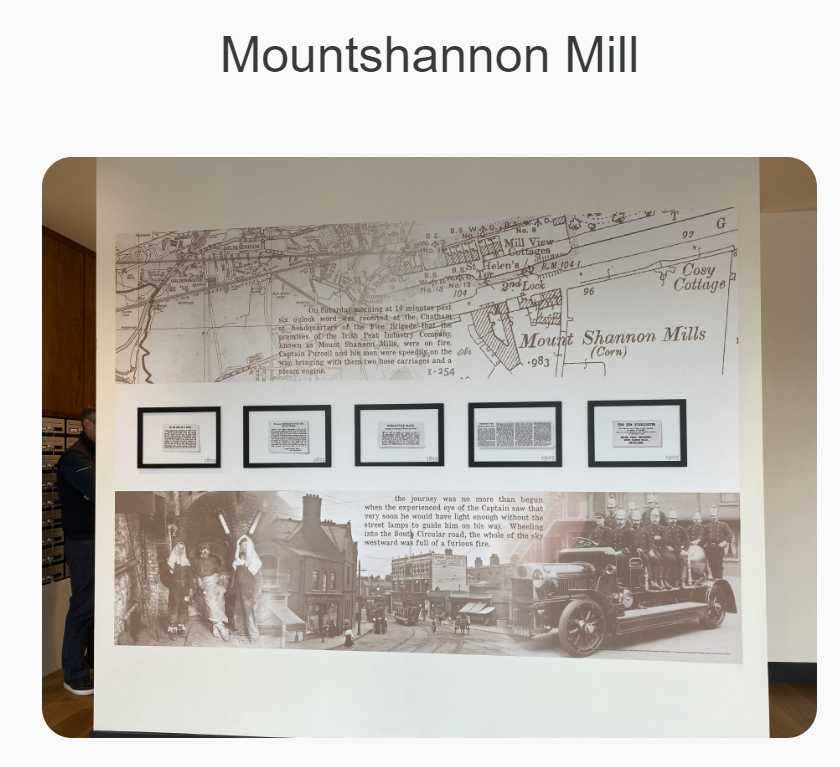
The construction of the Grand Canal in Dublin in the late 18th century provided opportunities for industrial and commercial development along its route. Mills of various sorts were common as the canal provided an efficient and for then timely means of transport into the city.
There were two corn mills located close to each other along the Drimnagh/Inchicore stretch of the canal, both sited on the Drimnagh side. One was the Harcourt Mill, which was situated close to where Good Counsel GAA club now is, and the other was at the Second Lock, which was for many years the Dulux paint factory. This was called Mount Shannon Mill and the earliest record I can find is from 1809 where a James Morris advertises the sale of two mill stones, and gives his address as Mount Shannon Mill
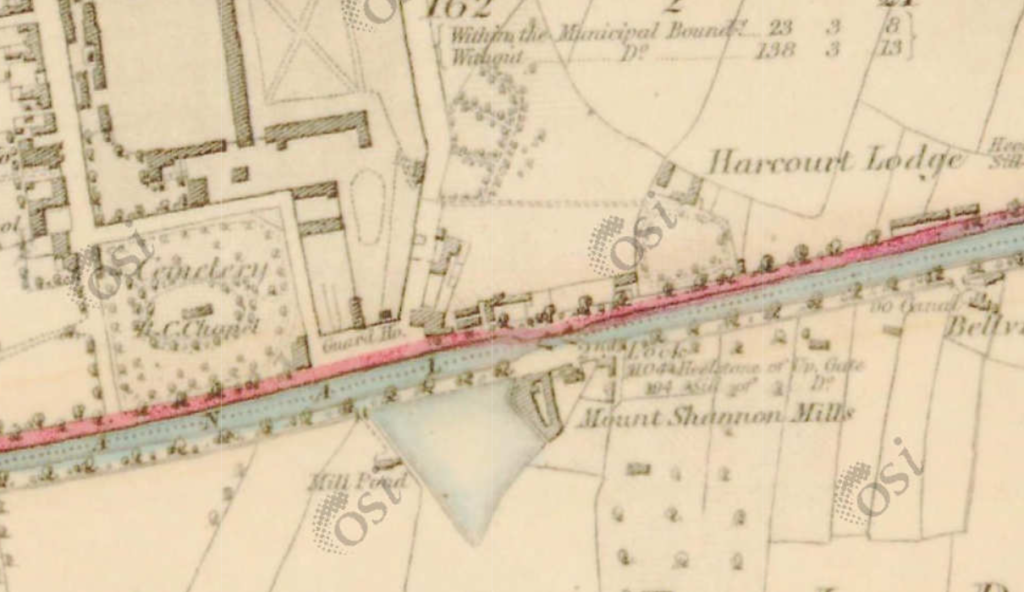
The mill appears on the early 6-inch OS map with an extensive mill pond showing.
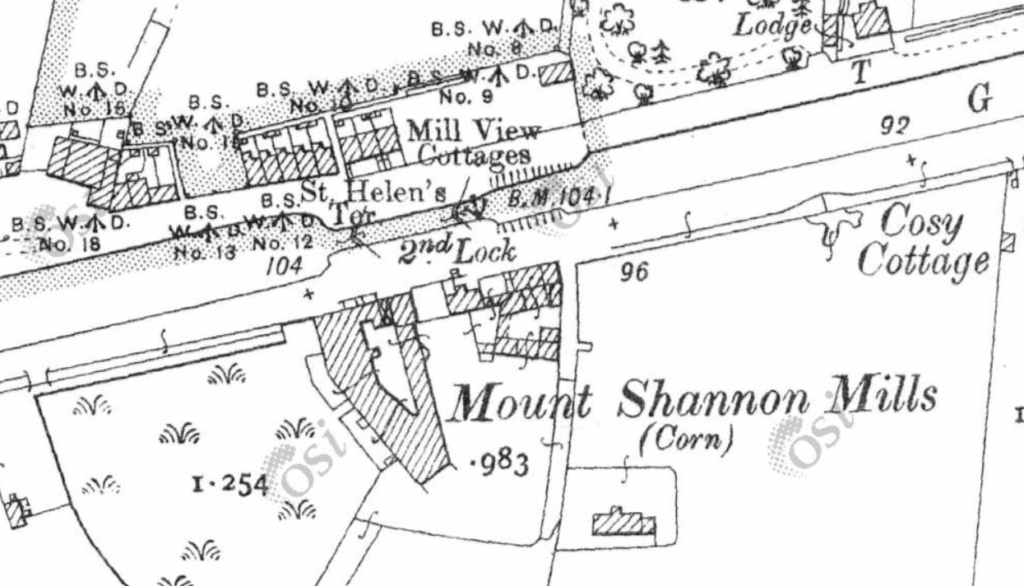
On the later 25 inch map there is reference to the terrace of cottages on the Inchicore side which still exist and are called Mill View.
Later references are to the Journeaux brothers Edward and Francis as being the owners.
Francis Journeaux was elected to the South Dublin Union representing the Palmerston district and it seems that the mill benefited by getting a contract to supply flour to the South Dublin Union Workhouse.
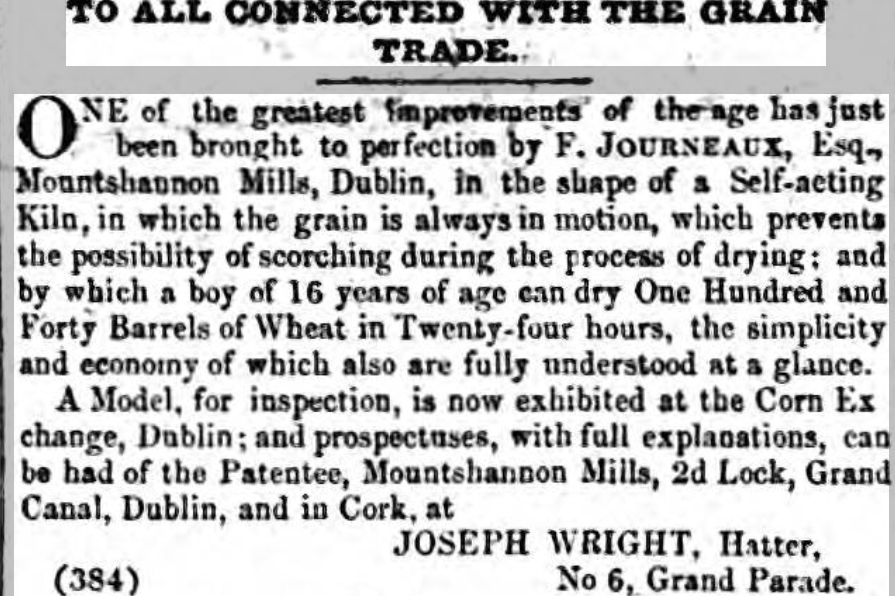
He applied for a patent for new method of drying grain which apparently could be operated safely by a 16 year old
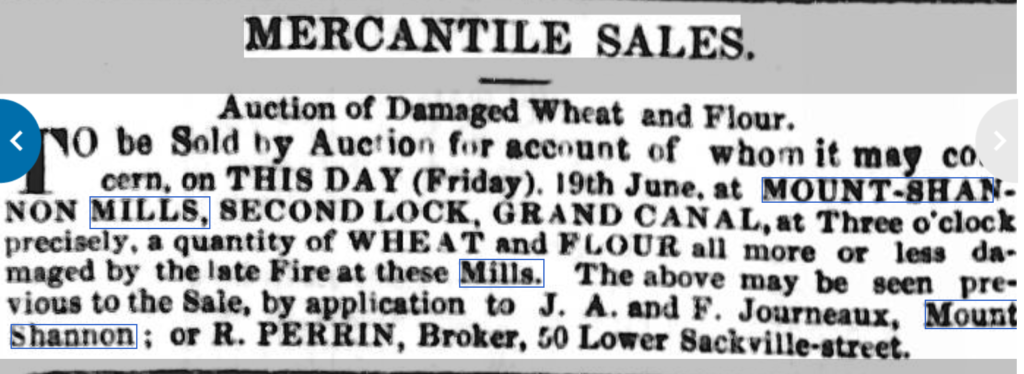
Unfortunately not long after this innovation much of the mill was destroyed by a fire – it is not recorded whether the new drying method played a part, but shortly afterwards the partnership of the brothers was dissolved and Francis Journeaux died.
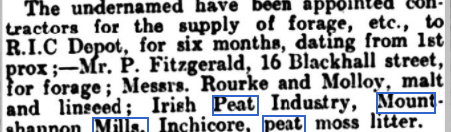
In later years the mill diversified into milling peat. Milled peat was in demand for use as litter in stables, and the large amount of horses associated with both the military and police provided a ready out let
There is a record of a contract to supply peat to the RIC
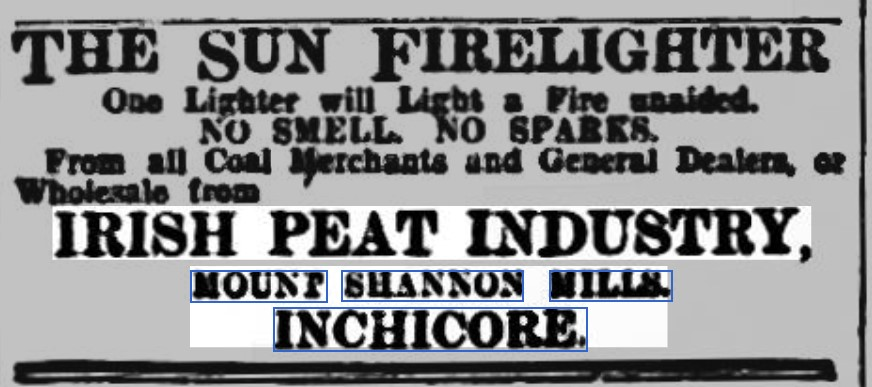
The Irish Peat Industry company premises at the Second Lock was very extensive and reached six storeys high. One of its products was firelighters which it advertised as being spark free
Unfortunately again it seems that innovation was not accompanied by safety and the premises burned to the ground – see attached newspaper report 1905.
The premises had another life as a paint factory, first under the ownership of Parsons and later as the Dulux factory.
0 Comments