
Iveagh Gardens
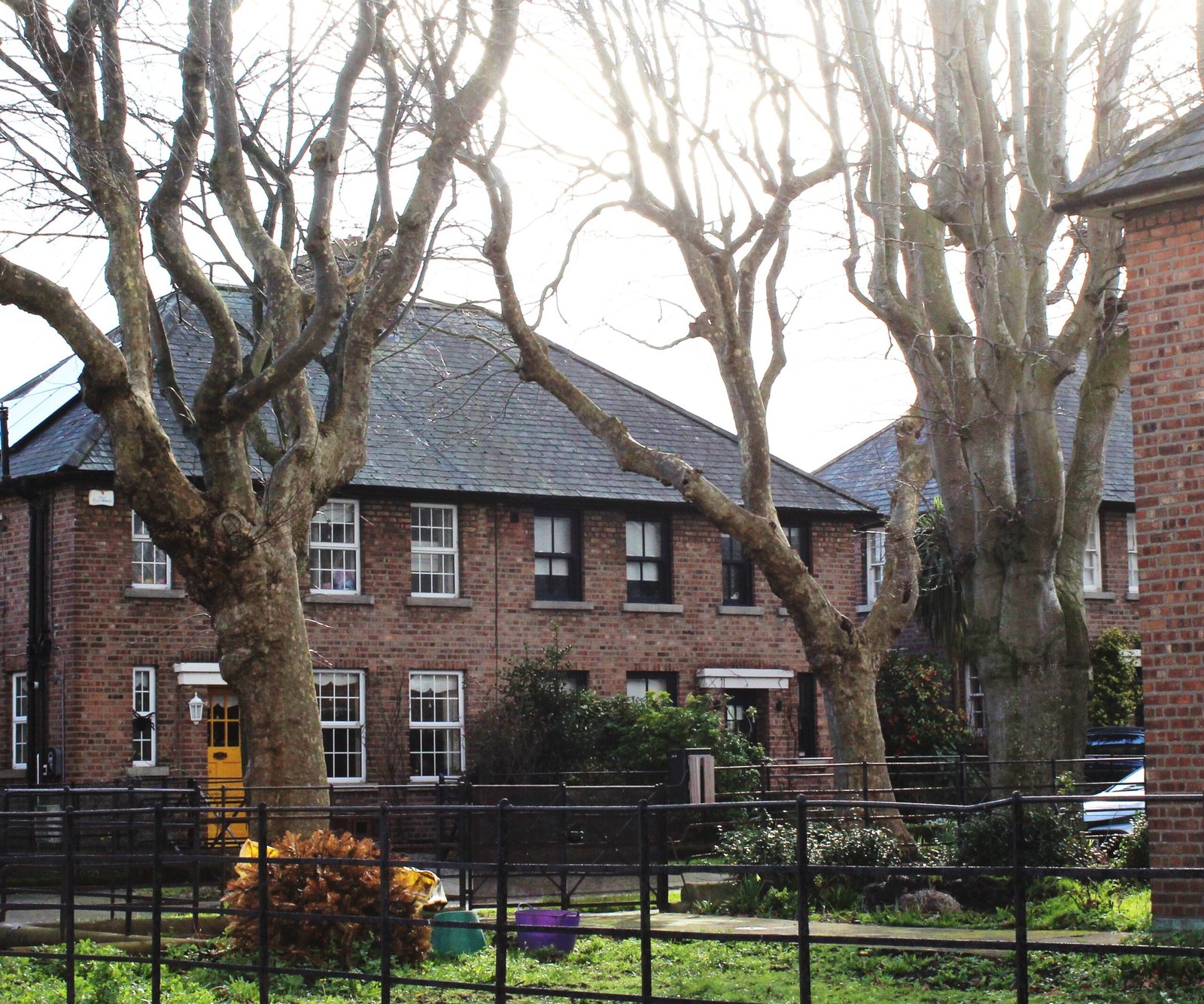
The Iveagh Trust was established in 1903 by the First Earl of Iveagh, Lord Cecil Edward Guinness to help the poor of Dublin and London. In 1925, the trustees purchased 30 acres of land on Crumlin Road from Mr. Charles Beggs of Fort Osman, Crumlin Road who had declined previous offers from the Dolphin’s Barn Brick Company. The purchase of the property by the Iveagh Trust was by way of a loan from Arthur Guinness & Son Ltd. The scheme was designed to provide affordable accommodation to Guinness workers and labourers and built between 1926 and 1936.
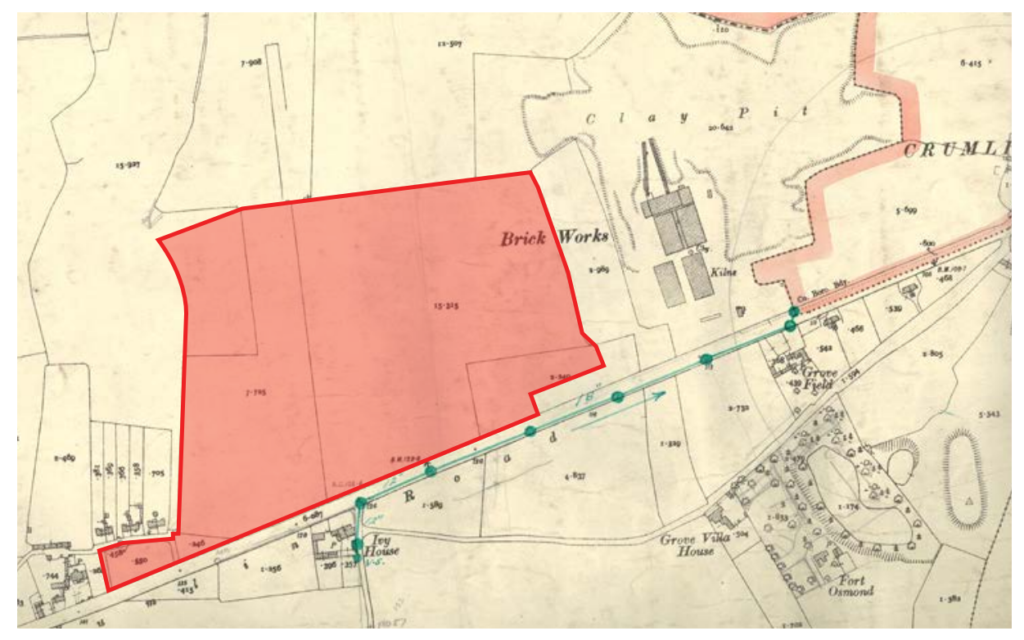
Lands purchased from Beggs on Crumlin Road
House Design:
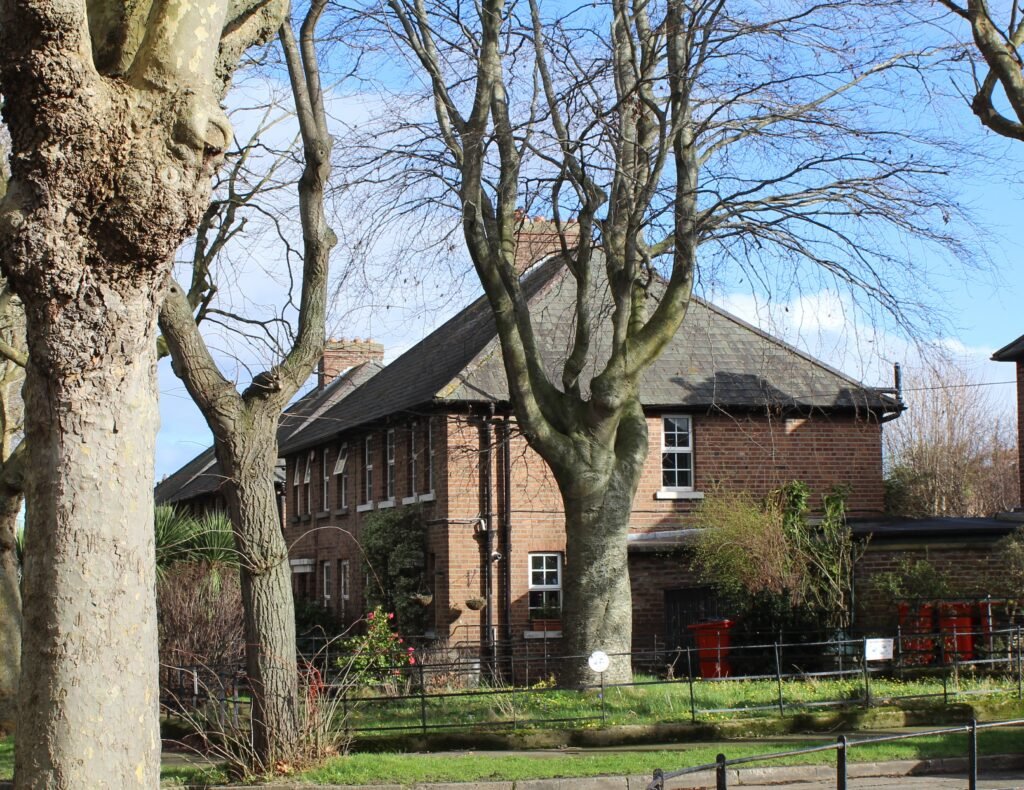
The development was designed by O’Callaghan and Webb Architects. The design consisted of 136 two storey semi-detached houses; 52 homes with four rooms and 84 with five rooms, laid out in a tree lined circular loop with one access route into the development from Crumlin Road. The houses were aesthetically defined by red brick facades, wide sash windows, steep slate roofs, small front/rear gardens, and iron railings.
The contractors were H. & J. Martin, a prominent builder construction company based in Belfast who had built Belfast City Hall and Belfast Opera House. The development cost £134,000 and accommodated 637 residents with stringent rental contracts. Rents were higher than city centre tenement flats and ranged from 19 shillings to 21 shillings. Sadly Lord Iveagh died in 1927 and did not see this project in its completion.
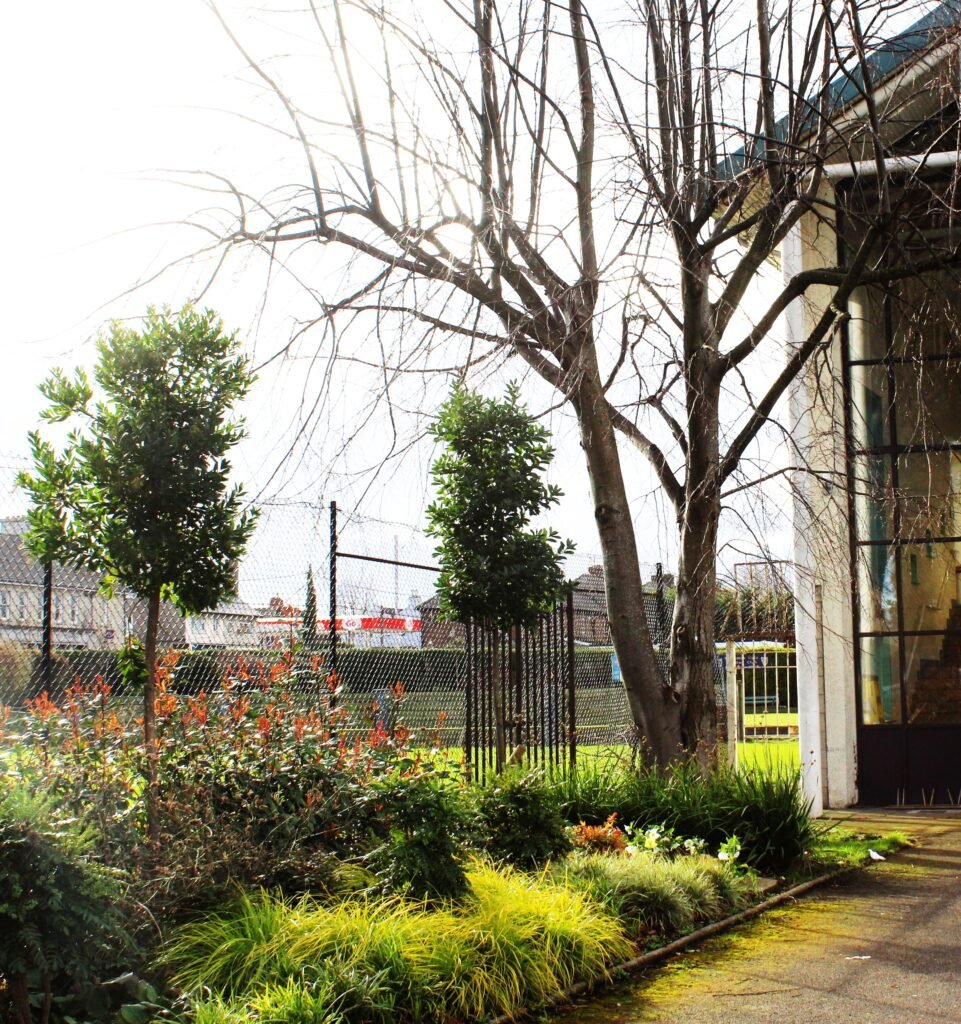
In 1970, the trustees agreed to sell Iveagh Gardens to fund another project. Of the 136 homes, 89 properties were purchased almost immediately. The remaining 47 homes were purchased over time, effectively privatising the garden estate.
The Iveagh Gardens Estate celebrated its centenary in 2026. Due to its distinct architectural design, Dublin City Council implemented Variation 8 of the City Development Plan 2022 – 2028 to protect the historical structure of the estate. Family housing needs have diversified over the century and careful modernisation of these houses must be undertaken by homeowners. A perfect example of such moderisation can be seen by Found Architecture.
References:
- Photographs by Fergus Parkinson, Drimnagh Historical Group
- The Drimnagh Historical Pocket Map by Cathy Scuffil and Patricia Ryan
- H&J Martin Construction UK
- Found Architecture
- Iveagh Gardens & Environs, Crumlin: Architectural Conservation Area Report (Dublin City Council) Variation 8 – City Development Plan 2022 – 2028.
0 Comments