EARL OF SHELBURNE
The Shelburne title has been created three times in the Peerage of Ireland, with all creations initially associated with the Petty family. The title’s name is derived from the region of Shelburne (Síol Bhroin) in County Wexford, Ireland. The barony takes its name from the Irish name Síol Bhroin meaning seeds of bran. It was also known as the “black land of Leinster” (Síol mBroin of Dubhthir Laighean) but anglicised to Duffry.
List of settlements
Settlements within the historical barony of Shelburne include:
- Arthurstown
- Ballycullane
- Campile
- Duncannon
- Saltmills
- Slade
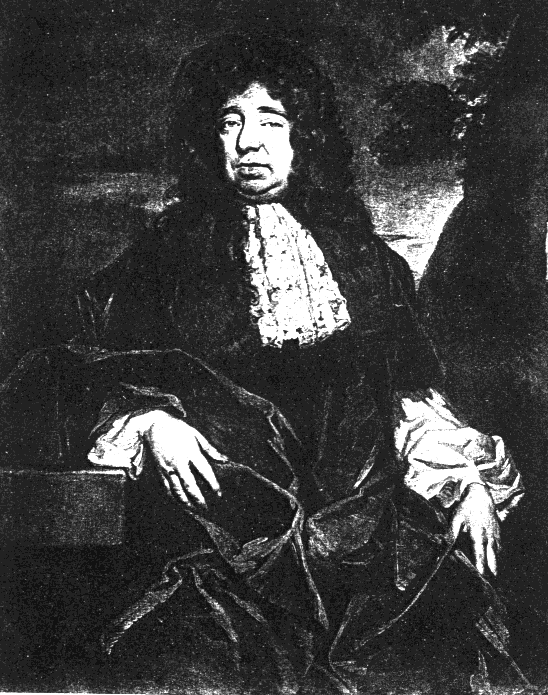
1688 – 1708: 1st Baroness of Shelburne – Elizabeth Petty (wife of Sir William Petty, British Economist, Scientist and Surveyor (Down Survey) to Cromwell, James II and Charles II). Appointed by King James II. This was a life title and became extinct upon her death around 1708.
In 1653 she married Sir Maurice Fenton. She had a daughter Margaret and Son William who both died before 1670. In 1667 she married Sir William Petty and had four children.
- Anne Petty (died November 1737)
- John Petty (born 1869 – died 1870)
- Charles Petty, 1st Baron Shelburne (1672–1696)
- Henry Petty, 1st Earl of Shelburne (1675–17 April 1751)
On 13 December 1688, James II created Lady Petty Baroness Shelburne. Simultaneously, her elder son with William Petty, Charles Petty, was also made Baron Shelburne.
1688 – 1696: 1st Baron of Shelburne – Charles Petty died young and the title died with him
1699 – 1751 1st Earl of Shelburne – Henry Petty, the youngest son of Lady Petty Baroness Shelburne and Sir William Petty succeeded his brother Charles as Earl of Shelburne. He was an Anglo-Irish peer who sat in the Irish House of Commons for Midleton 1692-93 and represented Waterford between 1695-99.He sat in the British House of Commons from 1715 – 1727 representing Great Marlow (1715 and 1722) and Wycombe (1722 and 1727).Lord Shelburne married Arabella Boyle, daughter of Charles Boyle (3rd Viscount of Dungarvan). They had one daughter who married who married Francis Bernard of Earl of Bandon.
1752 – 1761 John Fitzmaurice (born 1706), the second son of Thomas Fitzmaurice, 1st Earl of Kerry and Ann Petty, sister of the late Earl of Shelburne, was educated at Westminster and called to the Bar in 1727. He became High Sheriff of Kerry in 1732 and served in the Irish House of Commons between 1743 until 1751.
In 1750, he assumed his mother’s maiden name, Petty, by a private act of Parliament known as The FitzMaurice Name Act. Later that year, he was raised to the Peerage of Ireland as Baron Dunkeron and Viscount FitzMaurice. The title of Earl of Shelburne was revived for him in 1752 in the County of Wexford. By 1754 he was Governor of Kerry and was also sworn to The Privy Council of Ireland.
In 1760, he was given British peerage, the title of Lord Wycomb and a seat in the British House of Lords. He married his first cousin, Mary O’Brien, daughter of William Fitzmaurice. He was survived by his wife upon his death in 1761, who died in 1780. His earldoms were passed to his eldest son, William Petty FitzMaurice (1737 – 1805).
1761 – 1784 William Petty FitzMaurice was an Anglo-Irish Whig who became the 1st Home Secretary of Great Britain in 1782 and then Prime Minister of Great Britain between 1782 – 1783. Born in Dublin and educated in Oxford, he entered politics in Britain in 1760 as a Member of Parliament and took his father’s seat in the House of Lords in 1761. He served as Aide de Comm to King George III