
Goldenbridge Cemetery
In 1828, Catholics began reciting prayers at burials in the graveyard much to the distress of Protestant Clergymen. The Catholic Association initiated a project of opening a Catholic graveyard at Goldenbridge Cemetery.
James Bernard Clinch, a native of James’ Street was a founding member of the Catholic Association. His baptism is recorded in the church register on 18th July 1770 in the Parish of St James’ Church in James’ Street. Educated abroad, he returned to Dublin and became a barrister and was active in the service of Archbishop Troy.
In 1828, Daniel O’Connell, the Liberator and advocator of Catholicism funded the opening of Goldenbridge Victorian Garden Cemetery consisting of 2 acres. It was purchased from Matthias O’Kelly and opened by Daniel O’Connell, that same year.
Goldenbridge Cemetery was the first Catholic cemetery available since the Reformation for Catholics to bury their loved ones using their own religious rites. The first Catholic buried in the cemetery was Fr. Whelan of Dolphin’s Barn Church who was interred beneath the mortuary chapel.
The neo-classical mortuary chapel with an underground vault was built between 1830-1835. Nightwatchmen guarded the cemetery from robbers who regularly snatched bodies for a small fee. The remains were often used by the medical profession for research. By 1831, over 12,000 deaths were recorded.
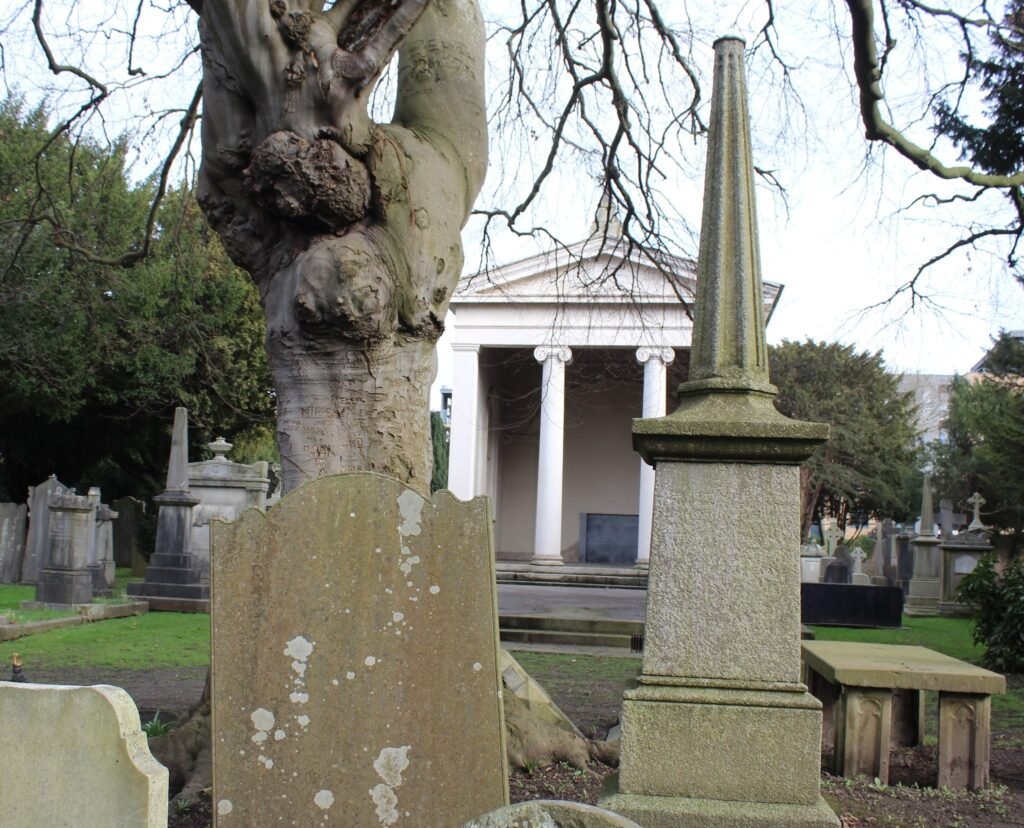
Photography by Fergus Parkinson
Mass burials took place during the Great Famine (1845-1849). The volume of mourners to and from the cemetery led to complaints from soldiers at Richmond Barrack who eventually forced the closure of the cemetery due to a cholera epidemic in 1867.
The cemetery is now managed by the Dublin Cemeteries Trust and has reopened to the public. William Thomas Cosgrave (5th June 1880 – 16th November 1965), the First Executive President of the Irish Free State and his son Liam Cosgrave (13th April 1920 – 4th October 2017) who also served as a Fine Gael Taoiseach (14th March 1973 – 5th July 1977) are both buried in a family grave in Goldenbridge Cemetery.
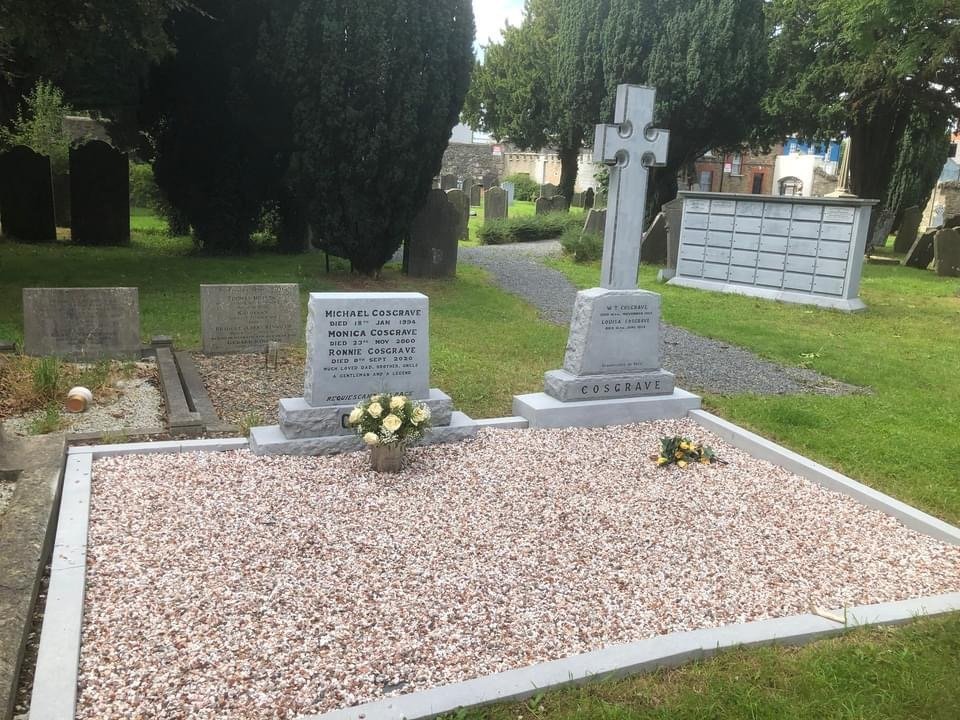
Photograph by: Fergus Parkinson
Goldenbridge Cemetery established in 1829, was the first Catholic burial ground in Dublin since the Reformation. Although Catholic, it wasn’t narrowly sectarian, its foundation charter pledged to bury the dead ‘of all denominations and none.’The cemetery was small, and covered an area of 3.2 acres (1.3 hectares). Between 1829 and 1856, the Cemetery’s mortuary chapel was the only Catholic church in the Kilmainham-Inchicore-Goldenbridge area. In the 1850s, the War Office attempted to close the Cemetery for health and safety reasons. They further argued the funeral processions attending the cemetery, and the tolling bells, had a disruptive effect on barracks life. In the 1860s, burials in Goldenbridge were closed to any family that didn’t already own a plot.