
Goldenbridge School
The Women’s Reformatory
The Women’s Reformatory (1856-1965) and the Girls’ Industrial School (1881-1983) The barracks were a magnet for the sex-trade. A red-light district developed in the Puck, the area west of Richmond Barracks.
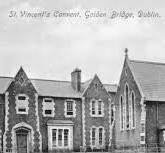
St Vincent’s School, Goldenbridge
After 1855, the Sisters of Mercy settled in Goldenbridge House, and the next year founded a Women’s Reformatory. Women prisoners could ‘live-in’ for the last years of their sentence, to learn employable skills including sewing and laundering.

In 1885, Dean Kennedy, Parish Priest of the Parish of St James’ built the Chapel of Our Lady of Mercy in the convent grounds at Goldenbridge. Its purpose was to serve as a chapel of ease.
In 1881, the Order replaced the Reformatory with an Industrial School – known as St. Vincent’s Industrial School. The residential school was for girls and young women between the ages of 3 and 16 years, convicted of crimes, or who were thought to be at risk of ‘falling into’ criminality.’ Children who were orphaned or may have lost their mother were incarcerated to the school, despite the fact that their father was still alive. It was considered a father’s duty to work for a living and not look after his children and quite often they were made Wards of Court.
The Goldenbridge Laundry remained open until the 1950s.
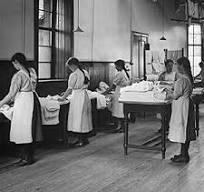
The school remained open until 1983. In the 1990s, Christine Buckley, a former pupil, brought the experiences of the children raised in St. Vincent’s Industrial School into national focus with the documentary “Dear Daughter” (Louis Lentin, 1996). The Goldenbridge Industrial School was one of those investigated by the Irish Commission to Inquire into Child Abuse.