Drimnagh Castle & Holy Well
In 1169, Dublin was seized by the Cambro-Norman, Richard Fitzgilbert De Clare, “Strongbow”. By 1171 the Normans established Dublin as the main Norman territory and settled on existing agricultural lands near rivers which consisted of a manor house, a church, workers’ cottages, mills, kilns and ovens. A moated surround was created at Drimnagh Castle as a defense of Anglo-Norman farmlands. This is now the only remaining moated castle in Ireland which is fed by the Bluebell Stream (Camac) (Murphy and Potterton 2010, 159, 201). In 1215 the lands of Drymenagh and Terenure were granted to the Anglo-Norman, Hugh De Barnewall (Ball 1906. 106). Drimnagh Castle (DU018-036) was run by the Barnewall family until the 1630’s (Murphy and Potterton 2010) (Joyce 1912. 196).
The Castle was prone to attacks by the O’Tooles from Wicklow who, in 1331, attacked a wedding party returning from Dublin to Drimnagh. The groom and Bret of Rathfarnham died (Wren 1987. 36). The bride, Lady Eleanora was a maiden, a bride and a widow in one day. Her true love, a member of the O’Toole family, was also injured during the attack. The O’Tooles retreated to the mountains where he died. Lady Eleanora lay down beside his body and was found dead three days later.
The Black Death had a considerable impact on the population of Drimnagh in 1348, 1362 and 1605 (Foley 2013. 177-78).
By 1460, Drimnagh Castle was the principal residence of John Barnewall, the County Sheriff which comprised a mill (DU018-035) and millrace (Ball 1906. 128). The parish church (DU018-033001) and graveyard (DU018-033002) are located northwest of the castle (Bluebell). The church was dissolved by St Patrick’s Cathedral in 1547 (Ball 1936. 133). In 1630, Sir Adam Loftus, leased Drimnagh Castle (Joyce 1912. 196.). A defense tower was added to the Castle. Drimnagh Castle reverted back to the Barnewall family but was sold in 1727 to the Marquis of Lansdowne (Ball 1906. 131).
Mr. Reilly resided there between 1772-1780. During the Act of Union in 1800, Drimnagh continued to be an agricultural community supplying food to a population of 200,000 in Dublin City (Casey 2005, 44).
In 1838, Mrs O’Sullivan ran the Drimnagh Paper Mill from the Camac tributary that also fed the Castle’s moat (Dalton 1838. 702). Mr. E. Cavanagh occupied the Castle in the mid 1800s Lewis (1837). The Hatch family were the last occupants of Drimnagh Castle before it was purchased by the Christian Brothers of Drimnagh Castle School in 1954.
Drimnagh Castle
Medieval Period A.D 1100 – 1600
In 1169, Dublin was seized by the Cambro-Norman, Richard Fitzgilbert De Clare, otherwise known in history as “Strongbow”. By 1171 the Normans had established Dublin as the main Norman territory. Henry II established manorial centres across already existing agricultural lands where water supplies were in abundance, thus creating high economic villages. Most villages consisted of a Manor House, a Church, workers’ cottages, mills, kilns and ovens.
A moated surround was created at Drimnagh Castle which consisted of a rectangular / sub-rectangular water filled ditch. Such a design was utilised as a defense of Anglo-Norman farms lands. This is now the only remaining moated castle in Ireland which is fed by the Bluebell Stream (Camac) (Murphy and Potterton 2010, 159, 201)
In 1215 King John granted the lands of Drymenagh and Terenure to the Anglo-Norman, Hugh De Barnewall (Ball 1906. 106). Drimnagh Castle (DU018-036) was run by the Barnewall family from the 13th Century (Murphy and Potterton 2010) to the 1630’s (Joyce 1912. 196)
Drimnagh Castle was prone to regular attacks from Gaelic families such as the O’Tooles from Wicklow who in 1331, attacked a wedding party returning to Drimnagh castle. Two members of the Barnewall family were killed, including the groom and a Bret of Rathfarnham (Wren 1987. 36). It is said that Lady Eleanora was a maiden, a bride and a widow all in one day. Her marriage was an arranged one and her true love was a member of the O’Toole family who was also injured during the attack near Cuilagh in Crumlin. The O’Tooles retreated back into the Dublin/Wicklow mountains where he died. Lady Eleanora lay down beside his body and was found dead three days later.
The Black Death reached Ireland in 1348 and again in 1362 (Foley 2013. 177-78) and also in 1605, where it had a considerable impact on the population of Dublin but in particular, on the population of Drimnagh (Foley 2013. 177-78).
In 1460, Drimnagh Castle was one of the principal castles in the metropolitan area of Dubin where John Barnewall, the County Sheriff resided. The castle comprised a mill (DU018-035) and millrace (Ball 1906. 128). The parish church (DU018-033001) and graveyard (DU018-033002) on the lands of Drimnagh Castle are located northwest of the castle in the village of Bluebell. The history of the church is unknown, however, in 1547 it was dissolved by St Patrick’s Cathedral (Ball 1936. 133)
In 1535, the King’s Treasurer, William Brabazon wrote to the Chief Justice, Lord Cromwell seeking that a new Lord Deputy be appointed in Dublin to deal with the insurgence of the Gaelic families, such as the O’Tooles, the Byrnes, the Kavanagh’s and McMurroughs (Dalton 1838. 350).
Post Medieval Period A.D 1600 – 1800
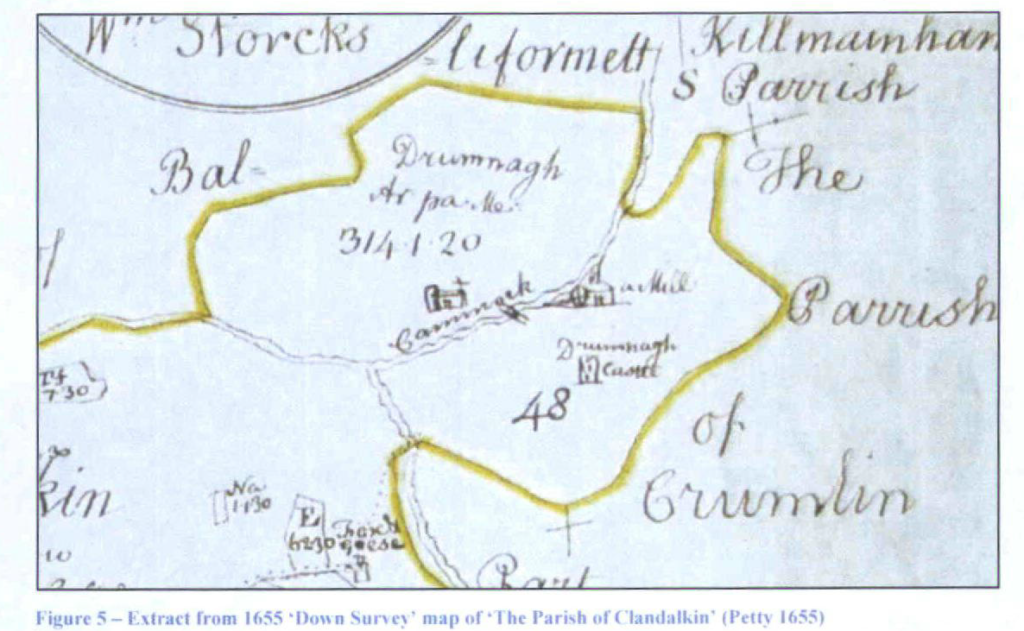
In 1630, Sir Adam Loftus, the new Lord Chancellor of Ireland and nephew of Archbishop Loftus of Rathfarnham Castle, leased Drimnagh Castle (Joyce 1912. 196.). Drimnagh Castle was remodelled in the 17th Century with the addition of a tower as a defense mechanism required at the time.
Sir Adam Loftus’ son-in-law, Lieutenant Colonel Philip Ferneley, Clerk of the Irish House of Commons during the Commonwealth period 1649-1660 described Drimnagh Castle as “an old castle made habitable”. Prior to Ferneley’s death in 1677, Drimnagh Castle had reverted back to the Barnewall family. In 1727 both the Drimnagh and Bremore Estates were sold by Walter Bagenal to the Marquis of Landsdowne as the Barnewall male lineage had depleted (Ball 1906. 131).
Gabriel Berenger illustrated Drimnagh Castle in 1772 and in 1780 it was noted by Austin Cooper that a Mr. Reilly resided there.
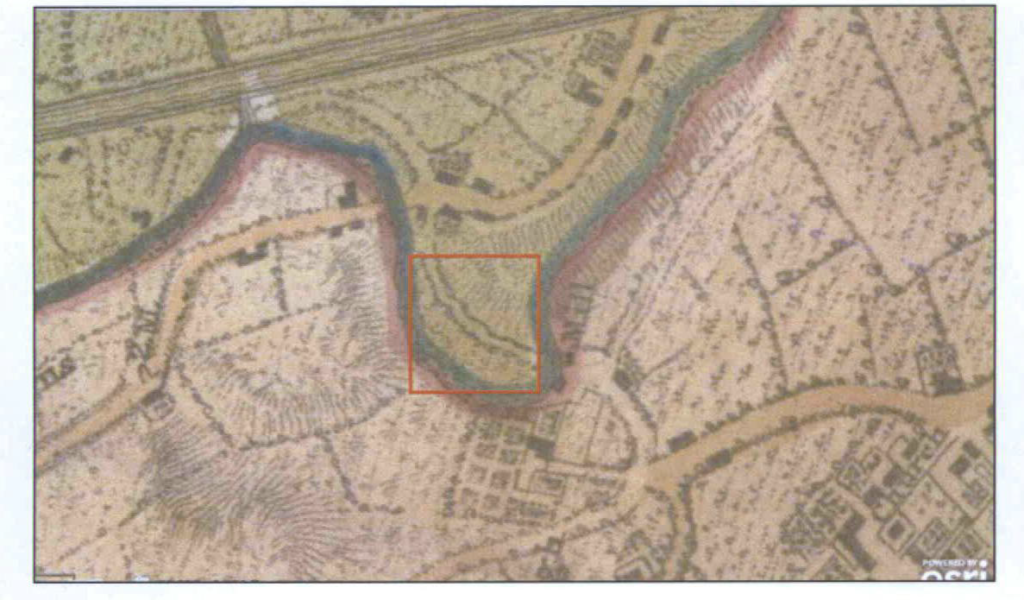
Rocque 1760 Map of Drimnagh Lands

Nineteenth and Twentieth Centuries
During the Act of Union in 1800, Drimnagh continued to be an agricultural community supplying food to a population of 200,000 in Dublin City (Casey 2005, 44).
In 1838 the moat at Drimnagh Castle was fed by a fosse / stream was used for a paper mill run by a Mrs O’Sullivan that employed 25 people (Dalton 1838. 702).
Lewis (1837) recorded that a Mr. E. Cavanagh occupied Drimnagh Castle in the mid 1800s.
In the mid-late 1930s Dubin Corporation built a housing scheme to the north eastern side of Drimnagh and Landsdowne Valley. The Hatch family were the last known occupants of Drimnagh Castle before it was purchased by the Christian Brothers of Drimnagh Castle School in 1954.
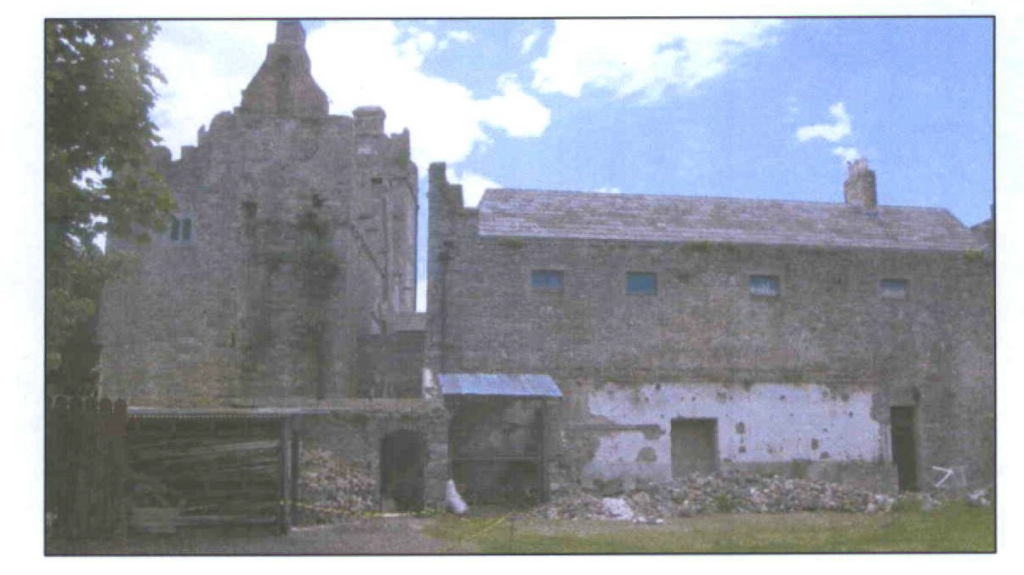
Drimnagh Castle in it’s current day
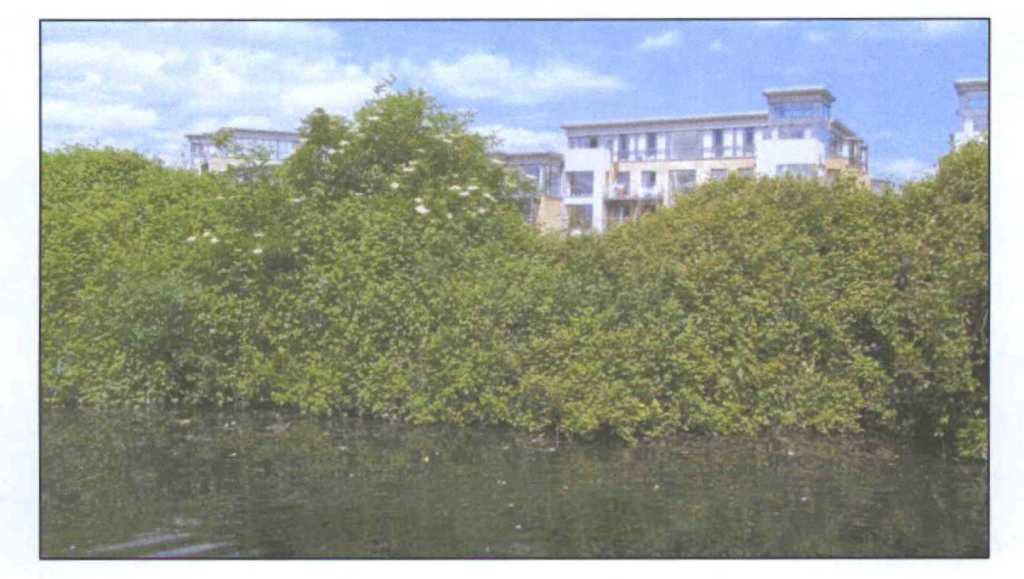
View from Drimnagh Castle Moat to Landsdowne Gate Apartments